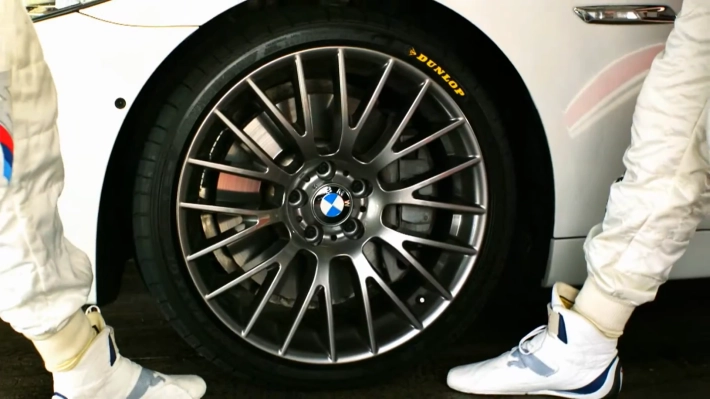

- Bead seat system allows for a more precise driving experience
- Max Flange Shield protects rims from accidental curb damage
- Multi-radius tread allows for responsive wet and dry handling, and increased cornering control
- Asymmetric tread design provides balanced wet and dry performance
- Flatter tread profile increase stability and superior precision
Some tires grip. Others respond. But the rare few — like the Dunlop Sport Maxx RT2 — seem to predict your next move before you even turn the wheel. Designed not just for performance but for harmony between driver and machine, the RT2 is Dunlop’s modern answer to the needs of high-performance drivers on the road and the occasional track. In a category dominated by giants like Michelin and Continental, this tire carves out its own niche by offering razor-sharp reflexes, solid wet-weather control, and a confident, connected driving feel. But what’s behind that performance? Let’s dive deeper.
Brief History
Dunlop, a brand with deep motorsport roots and a century-plus legacy, has long been synonymous with performance. The Sport Maxx line emerged from Dunlop’s push to bring racetrack-inspired control to street tires, and the Sport Maxx RT (Racing Technology) was a well-regarded step in that direction. But Dunlop wasn’t done.
With the Sport Maxx RT2, the goal was refinement. Launched in Europe and Asia before gaining global attention, the RT2 was developed with insights drawn from Dunlop’s racing programs, particularly its experience in endurance racing and GT competition, a world where tires can cost thousands per set, especially in Formula 1. While its predecessor delivered thrills, the RT2 added consistency, braking stability, and better wet grip — all without losing that driver-first focus. Notably, Dunlop fine-tuned the compound using data from their GT-class tires, aiming to enhance durability without dulling feedback.
The result is a UHP (Ultra High Performance) summer tire that bridges the gap between weekend enthusiast and daily driver. Built in Goodyear’s advanced European facilities (Dunlop is a Goodyear brand in many markets), the RT2 also benefited from shared compound development tech — a quiet advantage that allowed Dunlop to compete directly with flagship products from Michelin and Bridgestone.
Technologies and Construction
Modern performance tires are more than just rubber — they’re precision tools engineered for feel, grip, and control. The Dunlop Sport Maxx RT2 brings together an impressive mix of materials, structure, and geometry to deliver its capabilities. But rather than hiding behind buzzwords, let’s explore what actually goes into this tire — and why it matters.
Silica-Enhanced Dual-Compound Tread
At the heart of the RT2’s grip is a high-grip dual-silica compound. This material blend is tuned for optimal elasticity and adhesion on both dry and wet surfaces. The silica not only enhances traction — especially in lower temperatures — but also reduces rolling resistance, improving fuel efficiency and heat dispersion during high-speed driving.
Unlike some competitors that separate dry and wet zones, Dunlop opted for a more uniform surface blend, allowing the entire tread to perform predictably across a variety of conditions.
Asymmetric Tread Pattern with Massive Outer Shoulder Blocks
The RT2’s asymmetric design features extra-large outer shoulder blocks, a clear nod to racing slicks. These shoulder elements increase surface contact during cornering, maximizing lateral grip and helping the car “dig in” through aggressive turns.
The inner tread channels are optimized for water evacuation and directional stability, reducing hydroplaning without compromising road feel. This balanced layout ensures grip in changing conditions without sacrificing the dry-focused performance the RT2 is known for.
Hybrid Aramid-Reinforced Apex Layer
To maintain responsiveness at speed, Dunlop introduced an aramid-fiber-reinforced apex layer — similar to what you’d find in aviation-grade materials. Aramid (like Kevlar) is lightweight but incredibly stiff, allowing the tire to resist deformation during hard cornering or rapid acceleration.
This translates to sharper on-center steering feel and a more connected experience — you feel what the road is doing, but the tire keeps you composed and stable.
Adaptive Belt and Casing Structure
Underneath the tread lies a jointless belt structure designed to keep the contact patch consistent even under lateral loads. Combined with variable tension steel belts, this construction allows the tire to flex when needed (for ride comfort) and stiffen under high-speed or high-G-force maneuvers.
Dunlop also integrated a rayon casing ply, a more premium material than basic polyester, offering improved shock absorption without compromising handling feedback. This blend of adaptive stiffness gives the RT2 its dual personality: responsive in corners, forgiving over bumps.
Of course, design and materials only tell part of the story. What really matters is how all that engineering translates to the road, in real driving conditions, across corners, straights, and the occasional unexpected storm. So, how does the Sport Maxx RT2 actually perform when the rubber meets the road? Let’s find out.
Performance Analysis
Before numbers, lap times, or wear charts — a performance tire needs to inspire trust. The moment you lean into a corner, brake late into an apex, or feel a sudden downpour hit, you rely on your tires to respond without hesitation. The Dunlop Sport Maxx RT2 may not wear a racing badge, but its DNA is clearly performance-bred. Below, we break down its performance across key real-world factors that matter to both spirited drivers and those simply seeking a reliable, confident ride.
Dry Grip and Cornering Stability
On dry asphalt, the RT2 feels planted and agile. The massive outer shoulder blocks clamp down through sharp turns, offering immediate lateral stability and excellent corner exit traction. In real-world slalom testing, the tire shows minimal sidewall flex, holding its shape even under heavy load transfer.
The contact patch remains flat through extended sweepers, and traction loss is predictable — rather than snapping free, the RT2 gently progresses toward its limit, giving drivers time to correct. It’s not quite a track tire, but it behaves like one when pushed.
Wet Braking and Hydroplaning Resistance
Dunlop’s silica-infused compound and deep circumferential grooves deliver strong wet performance. Braking tests show confident deceleration even on slick pavement, with average stopping distances just 4–6 feet behind class leaders like the Pilot Sport 4.
Where it really impresses, though, is in resistance to hydroplaning. The RT2 maintains steering precision and lane control through standing water at speeds exceeding 60 mph, thanks to well-placed lateral grooves and a tread design that actively channels water out from beneath the tire.
High-Speed Stability
On the autobahn or highway, the RT2 delivers stability that punches above its class. Much like a hybrid tire balancing different demands, its hybrid belt design and rigid construction keep it calm and composed even at triple-digit speeds. Lane changes feel precise rather than vague, and wind buffeting rarely unsettles the chassis.
This makes the RT2 a strong candidate for powerful sedans and coupes that frequently see higher-speed travel, even if just for overtakes or quick highway sprints.
Steering Response and Feedback
The RT2 offers quick initial turn-in, with a noticeably precise on-center feel — likely thanks to its aramid apex and reinforced sidewalls. It doesn’t suffer from the “rubbery” lag found in some UHP tires.
Steering input translates naturally to motion, and small corrections are easy to make mid-corner. This gives drivers a sense of real connection to the road, whether on winding mountain roads or tight urban intersections.
Ride Comfort and Noise Suppression
While comfort isn’t typically a strong suit of UHP tires, the Sport Maxx RT2 handles everyday imperfections well. The rayon casing softens sharp impacts without creating sidewall slop, and mid-frequency road buzz is impressively controlled.
Noise levels are moderate. It’s not whisper-quiet, but it avoids the loud hum that some aggressive summer tires produce, even on concrete slabs or coarse asphalt.
Tire Wear and Longevity
UHP tires often sacrifice tread life for grip, but the RT2 manages a reasonable balance. On average, drivers report 30,000–35,000 miles of life under mixed-use driving — more than acceptable for the segment.
What stands out is the even wear pattern. The tire resists cupping and shoulder scalloping, even under aggressive driving. Rotations and proper alignment will stretch its lifespan further, but this isn’t a short-lived tire by any means.
Emergency Maneuvering and Load Management
Sudden lane changes, evasive maneuvers, or emergency stops — the RT2 remains composed under pressure. Load transfer is smooth, and the tire maintains contact during aggressive body roll. Under braking, it holds lateral grip well, reducing the risk of understeer or ABS-triggering wheel lockup.
In short, it’s a tire that doesn’t panic when you do.
Impressive on its own, no doubt — but tires never live in a vacuum. In a crowded ultra-high-performance segment, the real test lies in how the RT2 stacks up against rivals from brands like Michelin, Goodyear, and Bridgestone. Let’s take a closer look at the competition and see where Dunlop shines — and where it might have room to grow.
Comparison to Competitors
In this segment, we line up the Dunlop Sport Maxx RT2 against three of its most relevant competitors: the Michelin Pilot Sport 4, the Goodyear Eagle F1 Asymmetric 5, and the Bridgestone Potenza Sport. Each is a heavy-hitter in the ultra-high-performance summer category, with a loyal following and distinct strengths. Below, we break down how the RT2 fares against each rival across categories that matter most to performance-minded drivers.
Dunlop Sport Maxx RT2 vs. Michelin Pilot Sport 4
• Dry Handling
The Pilot Sport 4 sets the benchmark with razor-sharp turn-in and unwavering grip at high speeds. Michelin’s Dynamic Response Technology gives it an edge in driver feedback and precision, especially on twisty backroads or track-like conditions. The RT2 follows closely, offering stable mid-corner grip, but slightly less immediacy during turn-in transitions.
• Wet Performance
Michelin’s tire shines with its bi-compound tread and exceptional water evacuation, delivering short wet braking distances and confidence at highway speeds in the rain. The RT2 is highly capable, too — with excellent hydroplaning resistance and secure braking — though it trails the Pilot Sport 4 by a narrow margin in wet lateral grip.
• Comfort & Noise
The RT2 wins this round. While the Pilot Sport 4 offers a firmer, more performance-focused ride, the Dunlop manages better compliance over rough surfaces and generates less cabin noise at sustained speeds. Long-distance driving feels more refined in the RT2.
Assessment
Choose the Pilot Sport 4 if you prioritize ultra-sharp steering and track-day agility. Opt for the Sport Maxx RT2 for a slightly more comfortable ride without giving up much in wet or dry performance.
Dunlop Sport Maxx RT2 vs. Goodyear Eagle F1 Asymmetric 5
• Cornering Stability
The Asymmetric 5 impresses with neutral handling and progressive grip loss — ideal for both spirited driving and daily comfort. The RT2 offers a stiffer sidewall and faster lateral response, suiting aggressive cornering, but may feel slightly less forgiving for casual drivers.
• Wet Braking
Both tires excel in wet braking tests, but Goodyear’s ActiveBraking Technology allows for shorter stopping distances, especially in emergency conditions. Dunlop’s silica blend keeps it close behind, though its response under threshold braking can feel slightly less linear.
• Road Feedback
The RT2 delivers more tactile feedback through the wheel, particularly under pressure. Goodyear’s tire is a touch more isolated — great for comfort, but slightly muted in terms of steering feel.
Assessment
Choose the Eagle F1 Asymmetric 5 for a calm, confident daily driver with strong wet capabilities. Go with the Sport Maxx RT2 if you want more driver involvement and faster reactions during spirited drives.
Dunlop Sport Maxx RT2 vs. Bridgestone Potenza Sport
• Dry Grip & Turn-in Response
The Potenza Sport is the king of dry grip in this segment — its ultra-stiff carcass and aggressive shoulder blocks make it razor-sharp at turn-in and extremely stable under load. The RT2 feels more compliant but still holds its own with impressive grip and flatter cornering dynamics for road-focused performance.
• High-Speed Control
At sustained high speeds, the Potenza Sport feels like it’s built for the autobahn. The RT2 is no slouch — with solid directional stability and controlled sidewall flex — but it can’t match Bridgestone’s laser-straight tracking and aerodynamic tuning at 120+ km/h.
• Tread Life & Comfort
The RT2 comes out on top here. While the Potenza Sport trades longevity for maximum grip, Dunlop’s tire offers better wear characteristics and significantly less harshness over uneven pavement.
Assessment
Choose the Potenza Sport if your priorities are aggressive cornering, track-readiness, and autobahn dominance. Opt for the Sport Maxx RT2 if you value everyday livability with strong all-around grip and longer tread life.
Tire tests and rival matchups tell us a lot, but they can’t cover everything. That’s where direct questions from real drivers come in. Whether you’re eyeing the RT2 for a hot hatch or a rear-wheel-drive coupe, here are the answers to the questions we hear most often.
Frequently Asked Questions
Q: Is the Dunlop Sport Maxx RT2 suitable for daily driving?
A: Yes—the RT2 offers a great balance of performance and comfort, making it suitable for everyday use while still delivering sharp handling for enthusiastic drivers.
Q: How does the RT2 handle rainy weather and wet roads?
A: Very well — its high-silica compound and optimized tread pattern provide dependable grip, fast water evacuation, and confident braking in wet conditions.
Q: Can I use the Sport Maxx RT2 for highway cruising?
A: Absolutely—the RT2 maintains solid directional stability and remains quiet and composed at higher speeds, especially on well-paved roads.
Q: What types of vehicles are best suited for this tire?
A: The RT2 is ideal for performance-oriented compacts, sport sedans, and coupes—common fits include the Golf GTI, BMW 3 Series, Audi A4, and similar platforms.
Q: Can I take the Sport Maxx RT2 to occasional track days?
A: Yes—within reason. The RT2 is more of a fast-road tire than a dedicated track compound, but it can handle the occasional spirited session without excessive heat degradation. For best results, consider properly heat cycling your tires beforehand to improve consistency and grip throughout your laps.
Q: How does the RT2 compare to the original Dunlop Sport Maxx RT?
A: The RT2 improves upon its predecessor with sharper steering, improved cornering grip, and significantly better wet performance, thanks to updated construction and compound.
Q: Is road noise a concern with this tire?
A: Not really—it’s surprisingly quiet for a UHP summer tire, making it a strong choice for drivers who want both performance and refinement.
Q: What’s the expected tread life of the Sport Maxx RT2?
A: You can expect around 25,000 to 35,000 miles (40,000–55,000 km), depending on driving style and maintenance—a competitive figure for its segment.
Q: Does the RT2 work well on twisty mountain roads or spirited weekend drives?
A: Definitely—it delivers sharp feedback and a stable footprint during hard cornering, making it a fun and capable partner on technical routes.
Q: Is there a treadwear warranty included?
A: No—the Sport Maxx RT2 does not come with a treadwear warranty, which is common for ultra-high-performance summer tires. However, Dunlop covers defects in workmanship and materials.
So now that we’ve tackled the most common questions — from wet weather to track use — it’s time to boil things down. Where does the Sport Maxx RT2 really shine, and where might it fall a little short?
Let’s lay it out clearly.
Pros & Cons
Pros
- Excellent dry grip and cornering stability
- Confident wet handling with solid braking
- Quick and responsive steering feel
- Quiet and refined ride for a UHP tire
- Fuel-efficient rolling resistance
- Predictable behavior near the grip limit
- Stylish tread design with performance cues
- Lightweight construction improves agility
- Good value for money in the UHP category
- Performs well during spirited daily driving
Cons
- Shorter tread life under aggressive driving
- No mileage warranty offered
- Not ideal for cold climates
- Lacks ultimate feedback for serious track use
But don’t just take our word for it. Let’s see what real drivers — from forums, reviews, and enthusiast communities — have to say about living with the Sport Maxx RT2.
Real-World Feedback
Lab specs are one thing, but the true test is how a tire behaves out on the road. And based on real-world reviews, the Dunlop Sport Maxx RT2 largely delivers where it counts.
Drivers consistently report sharp, confidence-inspiring handling, especially in dry conditions. It feels planted and agile on twisty roads, bringing out the best in cars like the VW GTI, BMW 3 Series, and Audi A4.
Wet performance is solid when the tread is fresh, though some users note a decline as the tire wears, particularly under aggressive driving. That said, for daily driving and occasional spirited use, most find it more than capable.
One of the standout surprises is comfort. Despite its sporty edge, the RT2 rides smoothly over uneven pavement and keeps road noise pleasantly low — a welcome trait in the UHP segment.
As for tread life, expect around 20,000–25,000 miles under spirited use. It’s typical for this class, but worth noting for drivers clocking serious mileage.
In short, the Sport Maxx RT2 brings lively dynamics and real-world comfort, with only minor trade-offs in longevity and wet grip under pressure.
Common themes from driver reviews:
- “Really impressive dry grip — the car feels planted.”
- “Great tire for twisty B-roads. Predictable and sharp.”
- “Wet grip is solid early on but falls off faster than my old Michelins.”
- “Much quieter than I thought it’d be. Even after 15K miles.”
- “Good all-around tire, but tread wears quicker if you drive it hard.”
With all that in mind, from actual drivers, keeping your Sport Maxx RT2 in top shape comes down to some simple but important maintenance habits. Here’s how to get the most from these tires over their lifespan.
Quick Maintenance Tips
Proper care is essential to get the most out of your Dunlop Sport Maxx RT2. Here are some straightforward tips to maximize performance, safety, and tread life:
- Regular Tire Rotation
Rotate your tires every 6,000 to 8,000 miles (10,000 to 13,000 km) to promote even wear and extend lifespan. - Maintain Correct Tire Pressure
Check tire pressure monthly and keep it at the manufacturer’s recommended levels. Proper inflation ensures optimal grip, fuel efficiency, and tread wear. - Wheel Alignment Checks
Have your alignment inspected at least once a year or after hitting potholes or curbs. Misalignment can cause uneven wear and impact handling. - Balance Tires When Mounted
Always balance new tires or after rotations to prevent vibrations and premature wear. - Avoid Excessive Harsh Driving
Aggressive acceleration, braking, and cornering increase tire wear. Drive smoothly when possible to maximize tread life. - Store Properly During Off-Season
If you switch to winter tires, store your Sport Maxx RT2s in a cool, dry place away from direct sunlight to prevent compound degradation.
Final Thoughts
If you’re looking for a summer tire that brings the heat without breaking the bank, the Dunlop Sport Maxx RT2 is a sleeper hit. It’s quick to respond, surefooted in the wet, and smooth enough to keep your daily drive from turning into a chore.
No, it’s not a track-day warrior, and yes, the tread may fade faster than top-shelf rivals — but what you get is real-world performance with just the right amount of edge.
Want sharper handling, better road feel, and a little extra excitement every time the light turns green?
The Sport Maxx RT2 is more than ready.